Interaction Studies
Sunday, 15 January 2012
Week 9 | International Design For The International Audience
Saturday, 14 January 2012
Different People. Different Ways. Different Styles.
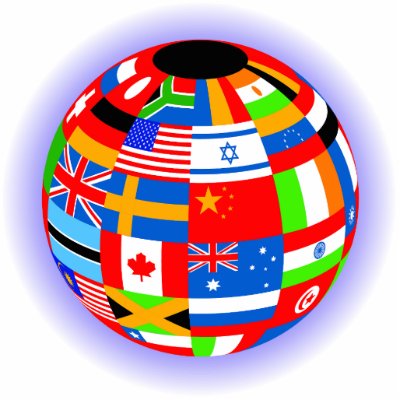
Different Culture, Different Design?

Every culture has different understanding and experience from the other. Thus, sometimes the designer need to design according to one’s culture to enable people from other countries could use the product. Some criterias that could be use in designing for different culture are international standard paper sizes, envelope sizes and address format. Try to avoid from using text in any image format because it could not be translated by online translator. Also, allow space for text expansion.
Be sensitive with the signs, colours, symbols used because it could meant an entirely different thing in other culture. Use generic icon instead. Ensure that the product supports various calendar, date and time formats. Make sure it also support various currencies.
Designers could decide on their own whether they wanted to produce an internationally appeal website where everyone from every countries could understand when they access the website/product or tailor-made the website/product according to one’s culture.
Prototyping : ?
Saturday, 17 December 2011
Week 8 | Prototyping
Prototype
Wednesday, 14 December 2011
Design and Prototyping

Prototype is the smaller scale, still of bugs and haven’t properly functioned yet. It is meant for the user to interact with the envisioned product, gain experience in realistic setting and explore imagined functions. It is a helpful aid to communicate with team members. There are two types of prototyping, low-fidelity and high-fidelity.
Low fidelity prototype is the one that does not look much like the final product. It uses material that are very different from the intended final version such as paper and cardboard. It tends to be simple, cheap and quick to produce. It is important during conceptual design but not actually will be included in the final design.
High fidelity prototype on the other hand uses material that you would expect to see in the final product. It takes longer time to be build and a lot of difficulties would ensue as a software prototype can set higher expectations. However, it is useful for selling ideas and for testing out technical issues.
As a conclusion, prototype is definitely important in designing as it helps the designer to improve the product before it was officially released.
Saturday, 10 December 2011
Requirements

Requirements are very important in meeting demands or expectation of user especially in designing the products. According to Wikipedia, it is a statement that identifies a necessary attribute, capability, characteristic, or quality of a system for it to have value and utility to a user. Requirements must be specific, unambiguous and clear. There are four types of product requirements; architectural, functional, non-functional and constraint.
In layman terms, requirements are what the user expected the product to be, what the product supposed to provide, what the characteristics of the product and the goal the product is supposed to enable the users to do.
Functional requirements are defining the functions and high level logic of what the product/software/website able to do. Whileas, non-functional requirements specify the criterias and attributes of the product/software/website. In general, functional describe what the product supposed to do by defining the functions while non-functional describe how the product supposed to be.
Friday, 9 December 2011
Week 7 | Requirements
- Interviews --> These are effective in getting people to explore the issues, they can be customized to be structured, semi structured or completely unstructured.
- Focus groups --> Important in the meeting of future or current stakeholders.
- Questionnaires --> Best at gaining an agreement ad highlighting problematic areas and disagreements during the requirements activity.
These are just some of the methods and many more can be used to their full advantage to get the most data out of the activities. These are all of course influences by other factors such as the nature of the task, participants and the available resources.
