Showing posts with label Nurul Huda Abd Razak. Show all posts

Saturday, 14 January 2012

Different People. Different Ways. Different Styles.

When designing for a different party, there are lot of “rules and regulations” to be carefully observed and followed in order to avoid misunderstanding and disputations. What size should be used? Which font is the most appropriate? Which color should be avoided? And so on. Every little details need to be abided in order to match some of the particular requirements.

Sizes and formats for papers, envelopes, calling cards, and etc; they are vary from each countries, depending on their standard specifications. Besides, addresses formats are differ for each place, which should be properly followed. All these are some of the criteria that needed to be carefully considered and conformed. Try to avoid using fonts or text in any image formats that are hard for the online translator to translate. Some things occurs to be in different meaning in some countries, so better study and at least try to avoid it as it can actually causes misunderstanding or even may lead to some sensitive issues.

These products should be equipped with options of selecting the supposed country so that it’ll corresponds with the selected country accordingly, decreasing the errors and confusions.

Prototyping : ?


A prototype is a mockup or can also be defined as electronic ‘picture’. It allows the stakeholders to interact with an envisioned product, gain experience in realistic setting and explore imagined uses. A prototype is a limited representation.
By prototyping, it gives aids when discussing ideas with stakeholders. It is a communication device among team members as well as an effective ways to test ideas. It clarifies vague requirements.
There are two types of prototypes; Low-Fidelity and High-Fidelity. Low fidelity prototypes do not look very much like the real final product. The materials used are often very different from the final product. This type of prototyping is cheap and quick to produce. It supports the exploration of alternative ideas/designs. Besides, it is important during conceptual design process.
High-fidelity on the other hand looks much more like what the real product would be. It often uses materials that we would expect to be in the final outcome. It is more accurate than low-fidelity prototyping. However, it takes a long time to build and the developers are reluctant to change something they have crafted for hours.

Thursday, 8 December 2011

Requirements : ?

What is requirement? According to Wikipedia, a requirement is a singular documented physical and functional need that a particular product or service must be or perform. In other words, requirement is a statement about an intended product that specifies what it should do or how it should perform. It should be as specific, unambiguous and as clear as possible and we must know how to tell when they have been fulfilled. It is most commonly used in a formal sense in systems engineering, software engineering, or enterprise engineering. There are types of requirements; Functional Requirements and Non-Functional Requirements. Functional requirement captures the intended behavior of the system. This behavior may be expressed as services, tasks or function the system is required to perform or in a simpler way, it is what the system should do. Non-Functional requirement includes constraints and qualities. Qualities are properties or characteristics of the system that its stakeholders care about and hence will affect their degree of satisfaction with the system while a constraint is a restriction on the degree of freedom we have in providing a solution.

Monday, 28 November 2011

User-Centered Design : ?


According to a Abras, C. user-centered design (UCD) is a broad term to describe design processes in which end-users influence how a design takes shape. It is both a broad philosophy and variety of methods. There is a spectrum of ways in which users are involved in UCD but the important concept is that users are involved one way or another. In other words, it is an approach to design that grounds the process in information about the people (users) who will use the product later on. It processes focus on users through the planning, design and development of a product. Let’s think this way; how many of us have bought a, let say, a VCR that we have struggled to use and eventually missed recording our favorite programs because we misunderstood the instructions? I bet some of us had experienced this kind of situation. Do we have to put up with designs like these? Isn’t it possible to design systems that are more usable?

UCD consult users about their needs and involve them at specific times during the design process; typically during requirements gathering and usability testing. There are UCD methods in which users have a deep impact on the design by being involved as partners with designers throughout the design process.

In conclusion, UCD is a general term for a philosophy and methods, which focus on designing for and involving users in the design of computerized systems. The ways in which users participate can vary. The involvement may be relatively light. They may be consulted about their needs, observed and participate in usability testing. Besides, the involvement can be severe with users participating throughout the design process as partners in the design. Wrapping up, involving users in design one way or another has been shown to lead to developing more usable satisfying designs.

Thursday, 17 November 2011

Graphic Design : ?

Supposed we are given a task to create an advertisement to sell a product or at least persuade the potential target users to buy the product. It has to convey a correct message in order to gain customers’ interest in buying the product. But how do we actually “send” or “deliver” the message? It is much easier if we are doing it in a verbal communication where we can just easily tell them from ‘A’ to ‘Z’ about the product. But how do we do it in a visual form?
That’s what a ‘real’ graphic design really is. It wasn’t just a piece of beautifully designed artwork without any specific message behind it. It is the process and art of combining text and graphics and communicating an effective message. There are principles and elements of design that needed to be utilized in order to achieve a good and effective piece of artwork.

Saturday, 12 November 2011

Affordances

As being defined by J. J. Gibson, “ Affordance is states that the world is perceived not only in terms of object shapes and spatial relationships but also in terms of object possibilities for action (affordances) — perception drives action. “. In other words, it is a visual clue to the function of an object. For an example, imagine a door that only opens in one direction. The door doesn't have a handle, thus it can't be pulled - it is visually perceived to be push only. If the door has a fixed-handle, then of course we know that it needs to be grasped and pulled.
Users know exactly they should do or should not do just by looking in the absent of pictures, labels, illustration or even instruction.
Wrapping up, I would say that a perceived affordance isn't a simple attribute that you either have or you don't. It is such a long, wide road of potential effectiveness. Just because object affords behavior doesn't necessarily mean it affords it well.

Monday, 7 November 2011

User Relation

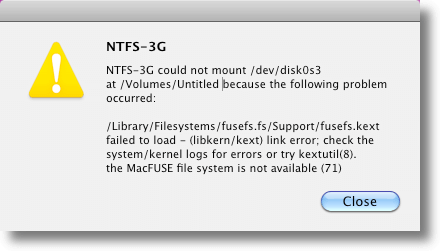
Have you ever come across the above error messages while you are working on your computer? Annoying, isn’t it? For some unknown reason, which we don’t even bother to find out what, the system tends to display some sort of error messages or warnings regarding the failure it encounters. The thing is, even we were provided with those warnings and error messages, most of us still don’t know and have no idea of what supposed to be the problem is.

This so-called user assistant seems to be useless some of the time. It displays messages and warnings alert the users that there’s something wrong with the application on-use or there’s a slightly coding error in the system. But what happen to be the problem is, the errors often displayed in a code forms such as “ERROR 404”, “Lp0 on fire”, “Incorrect Syntax”, “Error ‘9’” and etc. How are we supposed to know the meaning of these errors since it is displayed in such manner?

Wrapping up, these warnings really do help us aware that there’s a problem and prevent it from getting any worse but still sometimes it brings no use to some people because they have no idea of what’s going on and what they are supposed to do. Still, these error messages are really important. Without it, we would definitely face lots of trouble dealing with the failures.

Saturday, 29 October 2011

HCI : The User & The Computer


Human-Computer Interaction (HCI) is the study, planning, and design of the interaction between people and computers as being defined in Wikipedia.  It is explained as how the users or the people interact with technologies or the way they communicate, interrelate and work with and via technologies nowadays. Technologies available today are much more advanced and sophisticated compared to way back then. We can say that more than 80percent of them are built with advance interfaces such as touch screen and sort. More and more HCI-based interfaces are being installed on such things to promote and keep up with the latest trend. No matter we like it or not, this technology had brought major changes in our everyday lives. Things become lot simpler and easier and don’t need extra complex clarification. In wrapping up, no matter how people say about the bad side of a new technology, we surely have to agree that it do make our life easier and classy (perhaps).