Monday, 28 November 2011
Week 6 | User Centered Design
User-Centered Design : ?
Sunday, 27 November 2011
User Centered Design

True to the word, user-centered design (UCD) is a design philosophy that approach the method of designing that revolves around the information about the user that will use the product. UCD activities consist of four phases; analysis, design, implementation and lastly, deployment. These phases are very significant in making sure the designer understand about the needs of his/her own user.
UCD makes sure that the products are to the wanting and needing of the user instead to force the user to accommodate their behaviour for the product. In other words, UCD is a tailored made design for the user, focusing on the needs of specific user
However, this will be impossible for a large target audience because it will take a very long time for the designer to try to understand the user’s experiences one by one to implement on their design. But for the user, it proves to be an advantage as they could understand the product better. UCD has both pro and cons as I stated above.
Tuesday, 22 November 2011
Graphic Design and It's Awareness

People are always unaware about the power and the influence that graphic design bring in their life. When I decided to further my study in this area, a lot of people oppose my decision as they fail to see the importance of graphic design. Well, ignorant people are like that I guess since graphic design exist in almost everything, the food that they eat, the clothes that they wear, the books that they read, the phone that they use; everything.
It’s such a shame that graphic design is underrated and people are unaware of its existence even if they see and use it every single day. Graphic design works with drawing, painting, illustration, typography, any type of images, you name it!
It’s probably impossible to make more people aware of the importance of graphic design and people couldn’t see it since it is something they had never even thought about it.
Monday, 21 November 2011
What is Graphic Design?
In the previous lecture,Mr.Razi Bedu had been invited to give a talk about Graphic Design so before I start to talk or explain what is Graphic Design I'll like to share what other people think about Graphic Design.My brother is from MMU Melaka and he's in Business Admin.I ask him what will you answer if people come to you and ask what is Graphic Design.He said, Graphic Design is something that got to do with computer and it's something like abstract kind of design with many kind of colour.Sometime he said it look a like air brush painting that most teenagers like to do on the wall.I guess People who don't really learn art they think Graphic Design is all about create something in the software and that's it.
Graphic Design is actually in common thinking is something that we use to communicate with people in non-verbal communication or form of visual communication. It's sort of like poster,typography,create a business logo,type a letter,any magazine or newspaper ads or album cover, these are all call Graphic Design.
Sunday, 20 November 2011
Week 5 | Graphic Design
Thursday, 17 November 2011
Graphic Design : ?
Wednesday, 16 November 2011
Week 5 - Graphic Design
Monday, 14 November 2011
Persuasive Power
“The customer is King
King is always right
King never bargains”
Have you ever heard the saying before? Of course you do since this is something that had been planted in every store or industry available in the world. Affordance is the quality of an object or environment which allows a person to perform an action. For me, affordance is also one of the crucial elements of target marketing that is; demographics. In a way, affordance is something that permits a person to use the interface comfortably.
An example would be, switches. How do you know how/ways to flicker the switch? You…just know, right? There’s no need of an explanation, you just do.


So, that’s the gist of how affordance works. The point of affordance is for the user to know how it works without the help of a manual.
As Ms. Edina had asked to elaborate on the affordance of robot dog in this week’s class, I’ll write what I understand of it. Without the manual, most people automatically understood that the robot dog will more or less function like a real dog but of course without the needs for it to eat or take a poo. Thus, it gives the user an impression that taking care of a robot dog would be easier than taking care a real dog.
Since it is programmed to resemble a dog (except for the food and the poo), of course it’ll also be programmed on how to play with balls.
Perceived affordance on the other hand is the perceived properties of the object that suggest how the user could use it. It is use to guide users or as I understand it ‘corner’ user into choosing what the developer want the user to click on.
Week 4 | Affordance
Sunday, 13 November 2011
Sometimes There Are Thing You Need To Decide.Affordance
Saturday, 12 November 2011
Affordances
Monday, 7 November 2011
User Relation
Problems
Well, let's take a step back on HCI. HCI is created for human to feel more 'comfortable' with interfaces, machines and apps. But, how would you feel if it's becoming too 'intrusive' for your own liking? Does anyone remember how annoying those old Office Assistant in Windows? Let's refresh your memory for a trip wayyy down the lane.
Okay, in Microsoft Office 97 there was this cute (annoying) assistant called Clippit or more affectionately known as Clippy. Urbandictionary.com defined Clippit as "the annoying paper clip of Microsoft programs that asks you annoying questions when you dont need help". To those that weren't born yet at 97 must be wondering exactly how annoying was this Clippy. Well let's watch a video tribute of Clippy then.
Even Microsoft's people thought Clippy was annoying and held a public execution to 'kill' him.
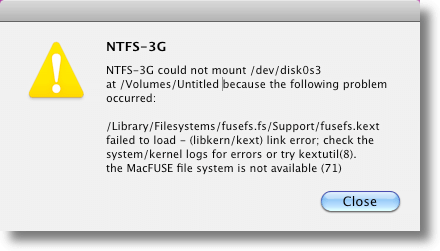
More problems regarding HCI are gimmicks that unable to live up to its hype and that affects the usability. This usually happens in camera and handphones. User frustration occurs daily in almost every HCI since again, it is not perfect. The most recent case would be the failure of using iPad in Anugerah Skrin TV3. Well, THAT is the ultimate problem of HCI that I can vividly remember.
In conclusion, as well as being imperfect HCI couldn't possibly satisfy all since not all likes/dislikes are the same for every people. There's a saying that goes, "one size does not always fit all".
Introduction of An Unknown Term
What is HCI? Have you ever heard of the term or are you even familiar with that word? Well, I’m sure you’re not. Even I am ignorant of the term before I entered this class but unknowingly us human actually use it hmm say 24/7?

Don’t believe me? Read on then.
HCI is an acronym to human-computer-interaction and according to Wikipedia it is defined as study, planning, and design of the interaction between people and c
omputers. Cited from usask.ca, “Human-Computer Interface Design seeks to discover the most efficient way to design understandable electronic messages”.
It’s just an awesome geeky scientific name for everything that you depend on daily.
Nowadays, I think it’s not wrong for me to actually say that people has become to dependent on computer and thus HCI has become an important part of human’s life without them even realizing it. For example, the mouse that you are holding right now or if you are using the touch screen, the thing that you touch or tap just now. Even the browse
r you are using now is in fact a product of HCI. As you reading my pathetic blog entry, you are using loads of HCI.
The importance of HCI was proven more with the existence of apps like Cleverbot that can mimic human conversations by communicating with humans.
In a way, HCI makes ‘communicating’ with machine feels more ‘human’ instead of the bland robotic command that pops up on your computer. It makes human feel more comfortable and relatable using the computer or machine when HCI is applied. It is, in a way is like a need.
Now you can brag to others, “I am using HCI every single day.”
Week 3 | User Relation
Friday, 4 November 2011
HCI (Human–computer interaction)
(Picture Taken from Google)
What happend now like what we can see the computers become more and there are so many type,shape,colour,usage and also its already become pervasive in culture.Almost half of the world use computer to go to the social network so what the designers can do is they need to increase the looking for ways to make interfacing with devices easier,safer and more efficient from the previous.
To me nowadays, every human need computer because most of their daily life will deal with this all kind of gadget.I would like to share this one taken from http://en.wikipedia.org/wiki/Human%E2%80%93computer_interaction " human-computer interaction studies a human and a machine in conjunction, it draws from supporting knowledge on both the machine and the human side. On the machine side, techniques in computer graphics, operating systems, programming languages, and development environments are relevant. On the human side, communication theory, graphic and industrial design disciplines, linguistics,social sciences, cognitive psychology, and human factors such as computer user satisfaction are relevant. Engineering and design methods are also relevant. Due to the multidisciplinary nature of HCI, people with different backgrounds contribute to its success. HCI is also sometimes referred to as man–machine interaction (MMI) or computer–human interaction (CHI)."
Thursday, 3 November 2011
HCI + Problems?
As briefly mentioned in previous post, Human Computer Interaction (HCI) did improved our lifestyle in terms of gadgets and technologies. As a designer, we also plays an important role as people nowadays have a very high expectations on everything. So, in terms of having good design and also manage to help people to interact with the technologies, there are many things that need to be considered to satisfied everyone. However, problems might arise because as been told 'people wont change if they don't want to'.
In my personal view, i think that problems will always arise but every thing can be solved and people will adapt with the changes of the technologies because no one likes to be left behind if the crowd do it.