Monday, 28 November 2011

Week 6 | User Centered Design


User Centered-Design (UCD) is a philosophy and a process. It is a philosophy that places the person, or the user, at the center as opposed to the thing. It is a process that focuses on cognitive factors such as perception, memory, learning problem-solving as they come into play during peoples' interactions with things. UCD can improve the usability and usefulness of everything from everyday things, to software to information systems to processes, basically anything with which people interact.

The goal of UCD is to produce products that have a high degree of usability. The main difference from other product design philosophies is that user-centered design tries to optimize the product around how users can, want, or need to use the product, rather than forcing the users to change their behavior to adjust to the product.


 This however can prove to create difficulties as having a system that revolves around the user makes it harder to pinpoint what exactly will satisfy the user. A good design will now always guarantee a satisfied customer. Design evolves, making the designer always looking out for the newest thing that is coming around. Also, what the user demands for may not always be what the user actually needs. 

Therefore, there needs to be a balance between giving the user what they want and using actual skills and knowledge to create a compromise between the two. It's basically the best of both worlds.


User-Centered Design : ?


According to a Abras, C. user-centered design (UCD) is a broad term to describe design processes in which end-users influence how a design takes shape. It is both a broad philosophy and variety of methods. There is a spectrum of ways in which users are involved in UCD but the important concept is that users are involved one way or another. In other words, it is an approach to design that grounds the process in information about the people (users) who will use the product later on. It processes focus on users through the planning, design and development of a product. Let’s think this way; how many of us have bought a, let say, a VCR that we have struggled to use and eventually missed recording our favorite programs because we misunderstood the instructions? I bet some of us had experienced this kind of situation. Do we have to put up with designs like these? Isn’t it possible to design systems that are more usable?

UCD consult users about their needs and involve them at specific times during the design process; typically during requirements gathering and usability testing. There are UCD methods in which users have a deep impact on the design by being involved as partners with designers throughout the design process.

In conclusion, UCD is a general term for a philosophy and methods, which focus on designing for and involving users in the design of computerized systems. The ways in which users participate can vary. The involvement may be relatively light. They may be consulted about their needs, observed and participate in usability testing. Besides, the involvement can be severe with users participating throughout the design process as partners in the design. Wrapping up, involving users in design one way or another has been shown to lead to developing more usable satisfying designs.

Sunday, 27 November 2011

User Centered Design


True to the word, user-centered design (UCD) is a design philosophy that approach the method of designing that revolves around the information about the user that will use the product. UCD activities consist of four phases; analysis, design, implementation and lastly, deployment. These phases are very significant in making sure the designer understand about the needs of his/her own user.

UCD makes sure that the products are to the wanting and needing of the user instead to force the user to accommodate their behaviour for the product. In other words, UCD is a tailored made design for the user, focusing on the needs of specific user

However, this will be impossible for a large target audience because it will take a very long time for the designer to try to understand the user’s experiences one by one to implement on their design. But for the user, it proves to be an advantage as they could understand the product better. UCD has both pro and cons as I stated above.

Tuesday, 22 November 2011

Graphic Design and It's Awareness


People are always unaware about the power and the influence that graphic design bring in their life. When I decided to further my study in this area, a lot of people oppose my decision as they fail to see the importance of graphic design. Well, ignorant people are like that I guess since graphic design exist in almost everything, the food that they eat, the clothes that they wear, the books that they read, the phone that they use; everything.

It’s such a shame that graphic design is underrated and people are unaware of its existence even if they see and use it every single day. Graphic design works with drawing, painting, illustration, typography, any type of images, you name it!

It’s probably impossible to make more people aware of the importance of graphic design and people couldn’t see it since it is something they had never even thought about it.

Monday, 21 November 2011

What is Graphic Design?


In the previous lecture,Mr.Razi Bedu had been invited to give a talk about Graphic Design so before I start to talk or explain what is Graphic Design I'll like to share what other people think about Graphic Design.My brother is from MMU Melaka and he's in Business Admin.I ask him what will you answer if people come to you and ask what is Graphic Design.He said, Graphic Design is something that got to do with computer and it's something like abstract kind of design with many kind of colour.Sometime he said it look a like air brush painting that most teenagers like to do on the wall.I guess People who don't really learn art they think Graphic Design is all about create something in the software and that's it.


Graphic Design is actually in common thinking is something that we use to communicate with people in non-verbal communication or form of  visual communication. It's sort of like poster,typography,create a business logo,type a letter,any magazine or newspaper ads or album cover, these are all call Graphic Design.


Graphic Design is something that we can say its creative because of the combination of art and computer to create or communicate the idea directly to the audience.The main tool in creating a perfect Graphic Design artwork are image and typography.Once you know all the rule in design and you know how to use a perfect compositon, definately you'll get a good  art work.


Sunday, 20 November 2011

Week 5 | Graphic Design

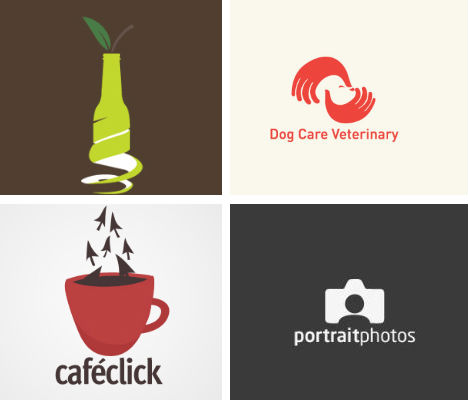
What is Graphic Design? To some people it is merely creating a picture that is pleasing to the eye. But graphic design isn't simply about a pretty picture, it's about conveying a message in a visual way. Many companies take advantage of graphic design in their logos to show to their customers what exactly is their company about simply by having a glace at their logo. A good graphic design should convey their message in a clear yet intelligent way. Distinctiveness is also a must. 


Good designs take the message and tries to show it in a graphical way that is easy for the audience to recognise and remember. Playing with positive and negative space, the compositions and all other elements are taken into account to show a distinct image.


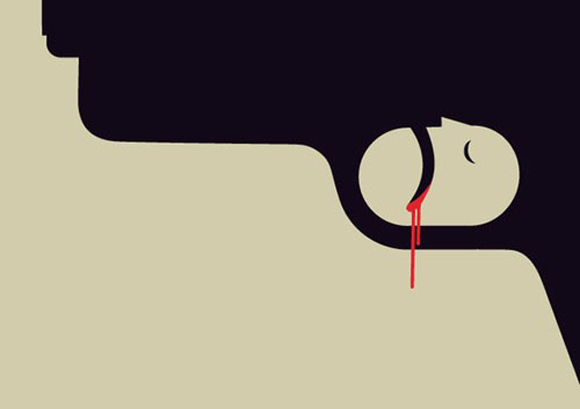
Graphic design in not just used in the corporate field. In addition to being used for logo and brand image, even an important political message can be shown across using graphic design. Text and images are merged together to deliver the message across to the desired audience. No lengthy explanations needed, a well-though design is able to explain itself and be understood by the public purely from the visuals.


Thursday, 17 November 2011

Graphic Design : ?

Supposed we are given a task to create an advertisement to sell a product or at least persuade the potential target users to buy the product. It has to convey a correct message in order to gain customers’ interest in buying the product. But how do we actually “send” or “deliver” the message? It is much easier if we are doing it in a verbal communication where we can just easily tell them from ‘A’ to ‘Z’ about the product. But how do we do it in a visual form?
That’s what a ‘real’ graphic design really is. It wasn’t just a piece of beautifully designed artwork without any specific message behind it. It is the process and art of combining text and graphics and communicating an effective message. There are principles and elements of design that needed to be utilized in order to achieve a good and effective piece of artwork.

Wednesday, 16 November 2011

Week 5 - Graphic Design


During lecture this week, our guest lecturer, Mr Radzi Bedu talk about graphic design. What is graphic design?  I asked a friend of mine from FOM, from his point of view he understands that graphic design is all about designing picture to look good. Part of it was a little bit true. Though making a good picture to look nice n beautiful, there are more to the term of ‘graphic design’.

From what we have learnt from a simple lecture by Mr Radzi, graphic design is a way of people to communicate and a good graphic designer would find a way to convey their messages through pictures, illustration and images. A proper definition of graphic design would be visual communication. 

People from the early ages learnt to communicate with their surroundings and graphic design has brought a whole new meaning to communication. To conclude the lecture, a good graphic design manage to make people understand the message behind all the graphics, and if it work means that the design is really good. To be a good graphic designer I learnt that these 4 things are really important. AIDA!

Monday, 14 November 2011

Persuasive Power

“The customer is King

King is always right

King never bargains”

Have you ever heard the saying before? Of course you do since this is something that had been planted in every store or industry available in the world. Affordance is the quality of an object or environment which allows a person to perform an action. For me, affordance is also one of the crucial elements of target marketing that is; demographics. In a way, affordance is something that permits a person to use the interface comfortably.

An example would be, switches. How do you know how/ways to flicker the switch? You…just know, right? There’s no need of an explanation, you just do.

So, that’s the gist of how affordance works. The point of affordance is for the user to know how it works without the help of a manual.

As Ms. Edina had asked to elaborate on the affordance of robot dog in this week’s class, I’ll write what I understand of it. Without the manual, most people automatically understood that the robot dog will more or less function like a real dog but of course without the needs for it to eat or take a poo. Thus, it gives the user an impression that taking care of a robot dog would be easier than taking care a real dog.


Since it is programmed to resemble a dog (except for the food and the poo), of course it’ll also be programmed on how to play with balls.

Perceived affordance on the other hand is the perceived properties of the object that suggest how the user could use it. It is use to guide users or as I understand it ‘corner’ user into choosing what the developer want the user to click on.